
—Prof. P. Archibald Furtado
LAST GURU OF BENNEKUDRU
'Madhava Mangala Poojary'— A Saintly Soul, a Wise Mediator and a Friend of Education
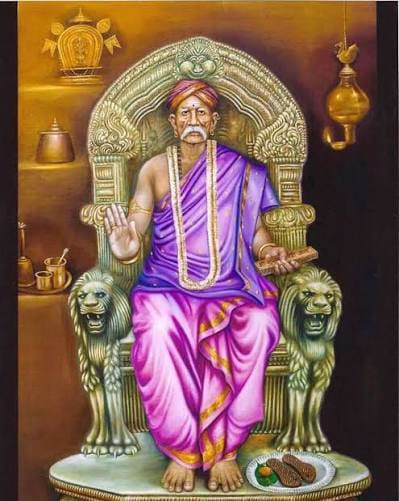
There are people whom history remembers through monuments.
There are others whom communities remember through traditions.
And then there are a rare few whose memory survives because people still speak of them with reverence, affection and gratitude.
Shri Madhava Mangala Poojary of Bennekudru, Barkur, belongs unmistakably to that rare category.
For me, this remembrance has a very personal beginning.
As the Admin Coordinator of the National Educational Institutions, Barkur, managed by 'The Barkur Educational Society' (Regd.), I have had the privilege of meeting many remarkable people who helped me understand the real fabric of Barkur—its extraordinary diversity, its traditions, its generous cosmopolitan spirit and, above all, 'the people who quietly built Barkur's social history'.
Among the many stalwarts I have encountered, my beloved late Principal Sri B. Seetharama Shetty occupies a particularly revered place.
Indeed, I often say that I am associated with the Barkur Educational Society because of him. A teacher by profession,
Principal over 25 years, a former Secretary and, until his passing, Vice-President of the Society, Principal Shetty had an extraordinary association with the National Institutions stretching across nearly seven decades. He was, in every sense, an encyclopedia of the National Institutions.
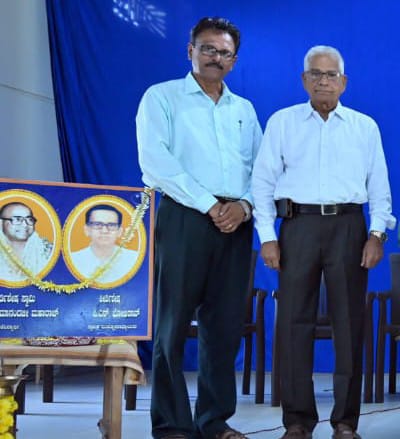
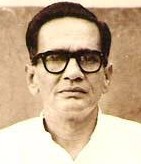
Headmaster PN Bhojarao
Ask him about any corner of that vast 18.5 - acre campus, and he could tell you its history. Mention an old student and, very often, he could recall not merely the name but the family, the circumstances of admission and sometimes even the class the student joined.
Listening to him was like opening a living history book...!!
A Photograph That Opened a Forgotten ChEducation
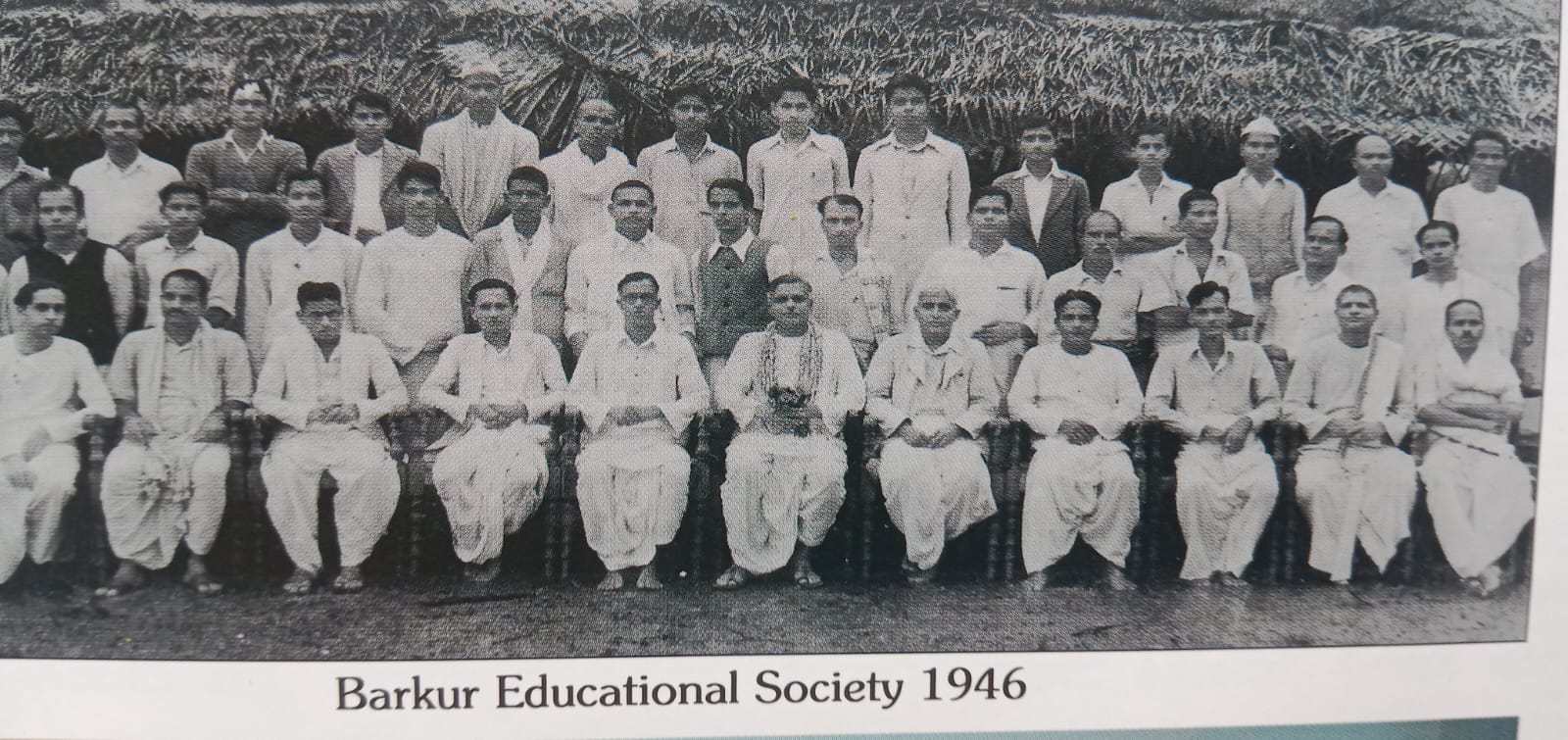
It was during one such conversation that an old group photograph caught our attention.
I looked at the picture and he asked him a rather straightforward question:
“Archie, how many of these people can you recognise?”
With considerable difficulty, I could identify just seven of the 37 faces..!!
Principal Shetty smiled.
He made me sit beside him and began introducing them—one after another.
Not one of them was alive by then.
Yet, as he spoke, each face seemed to come alive.
Every person had a story.
Every name had a connection, represented a chapter of Barkur's social history.
And then, pointing towards a simple, dignified face in the second row, he said:
“He is Guru.”
The name followed:
“Madhava Mangala Poojary.”
I remember the change in Principal Shetty's face as he spoke those words.
He was not merely identifying a person in an old photograph.
He was introducing me to a 'legend'.
The Last of a Great Guru Parampara:
Madhava Mangala Poojary was the ninth and last Kula Guru of the historic Guru tradition of Bennekudru.
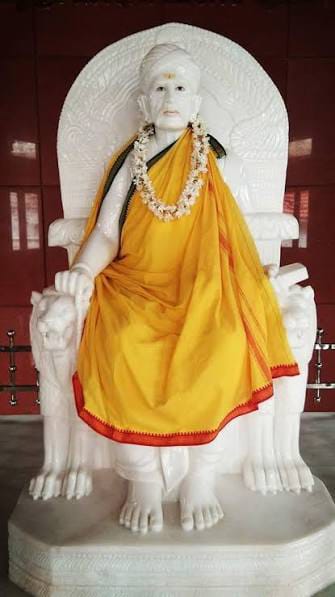
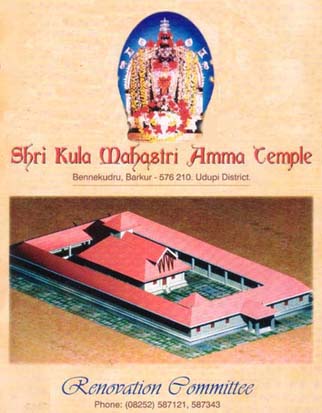
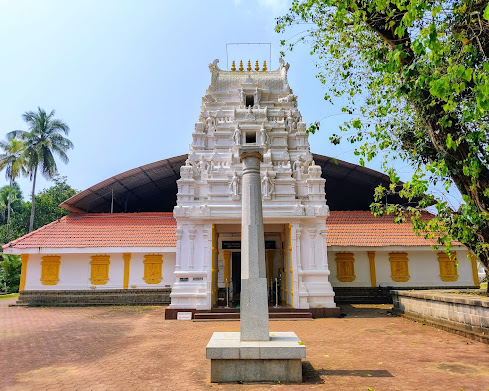
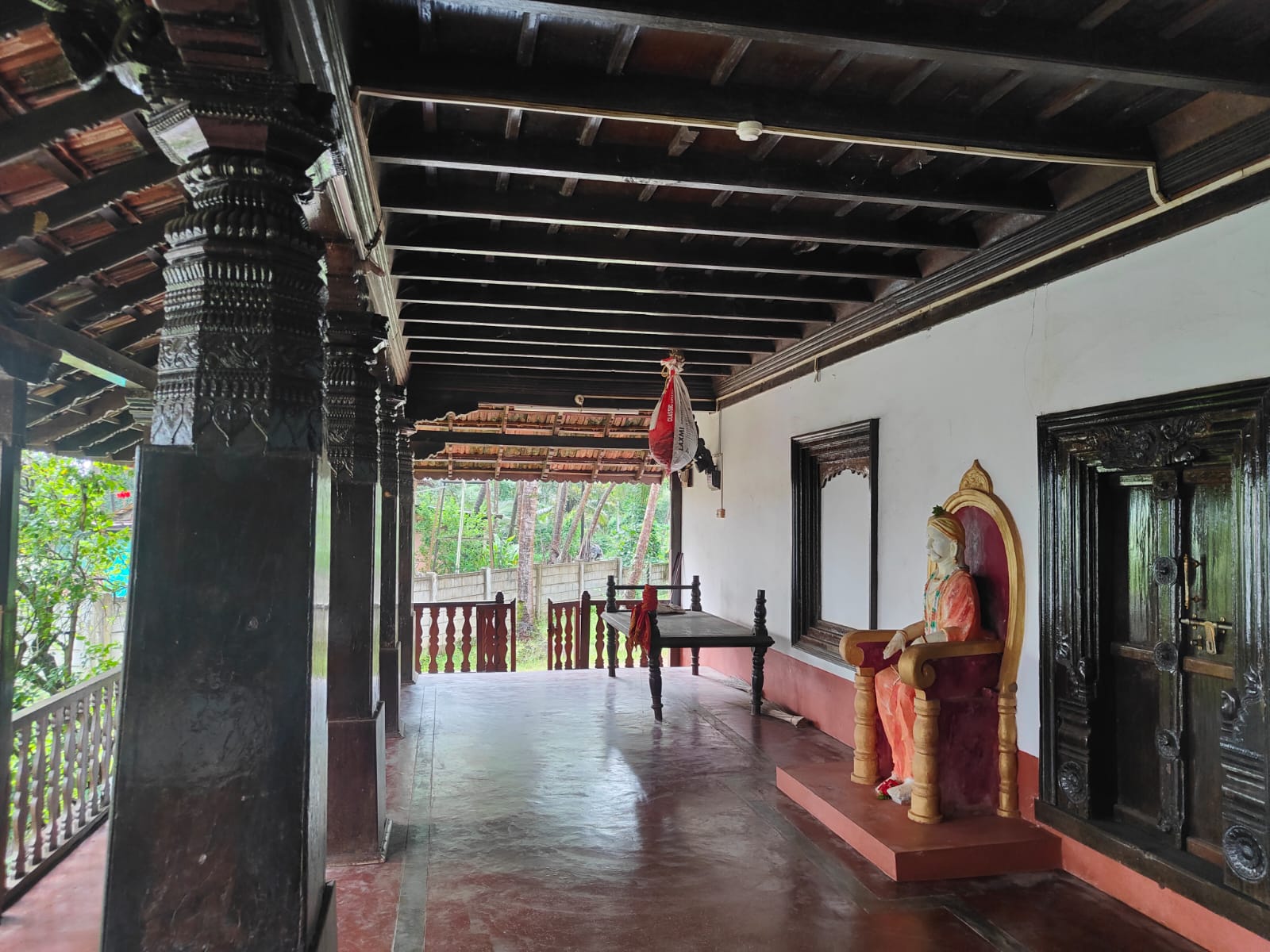
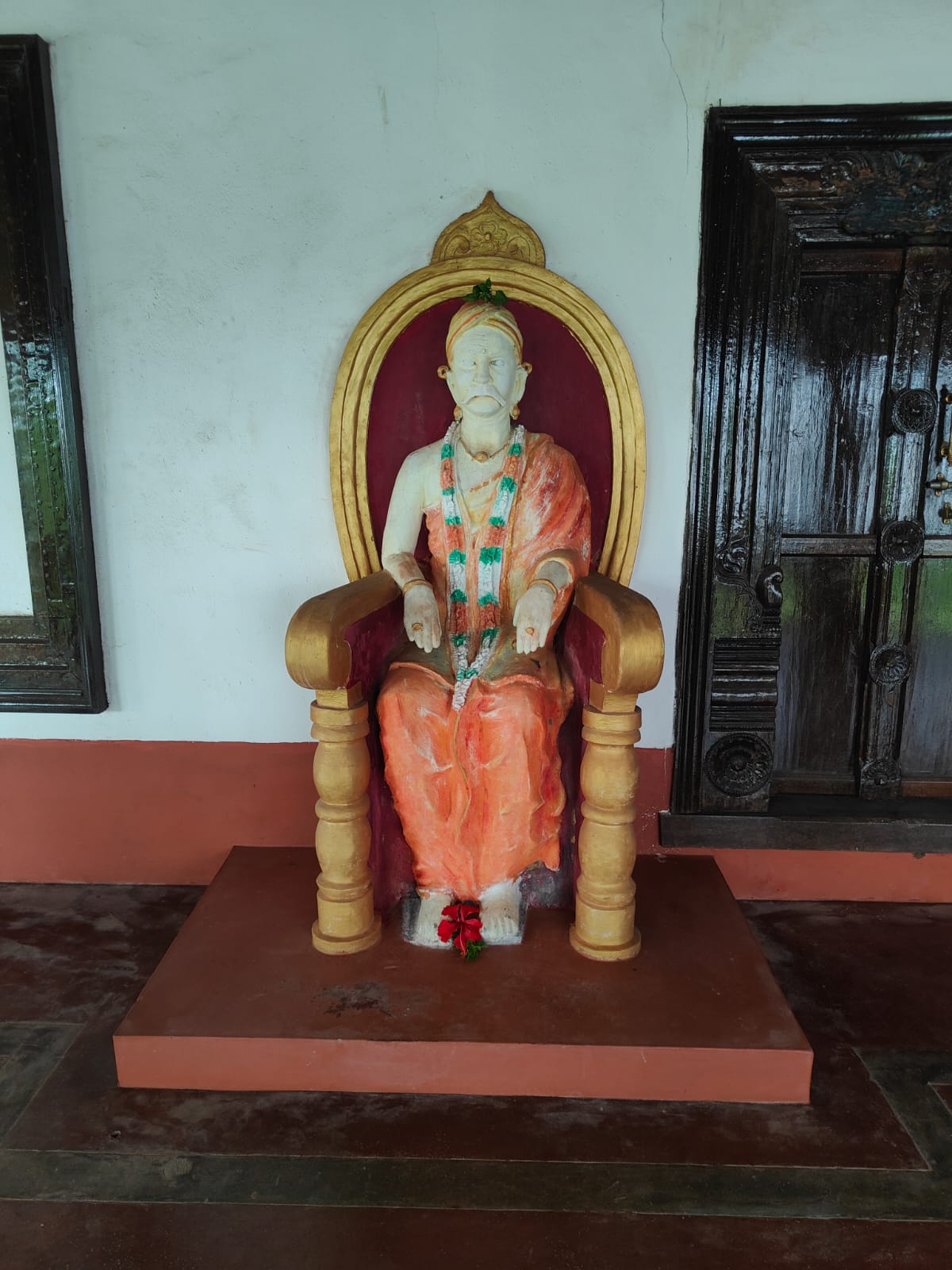
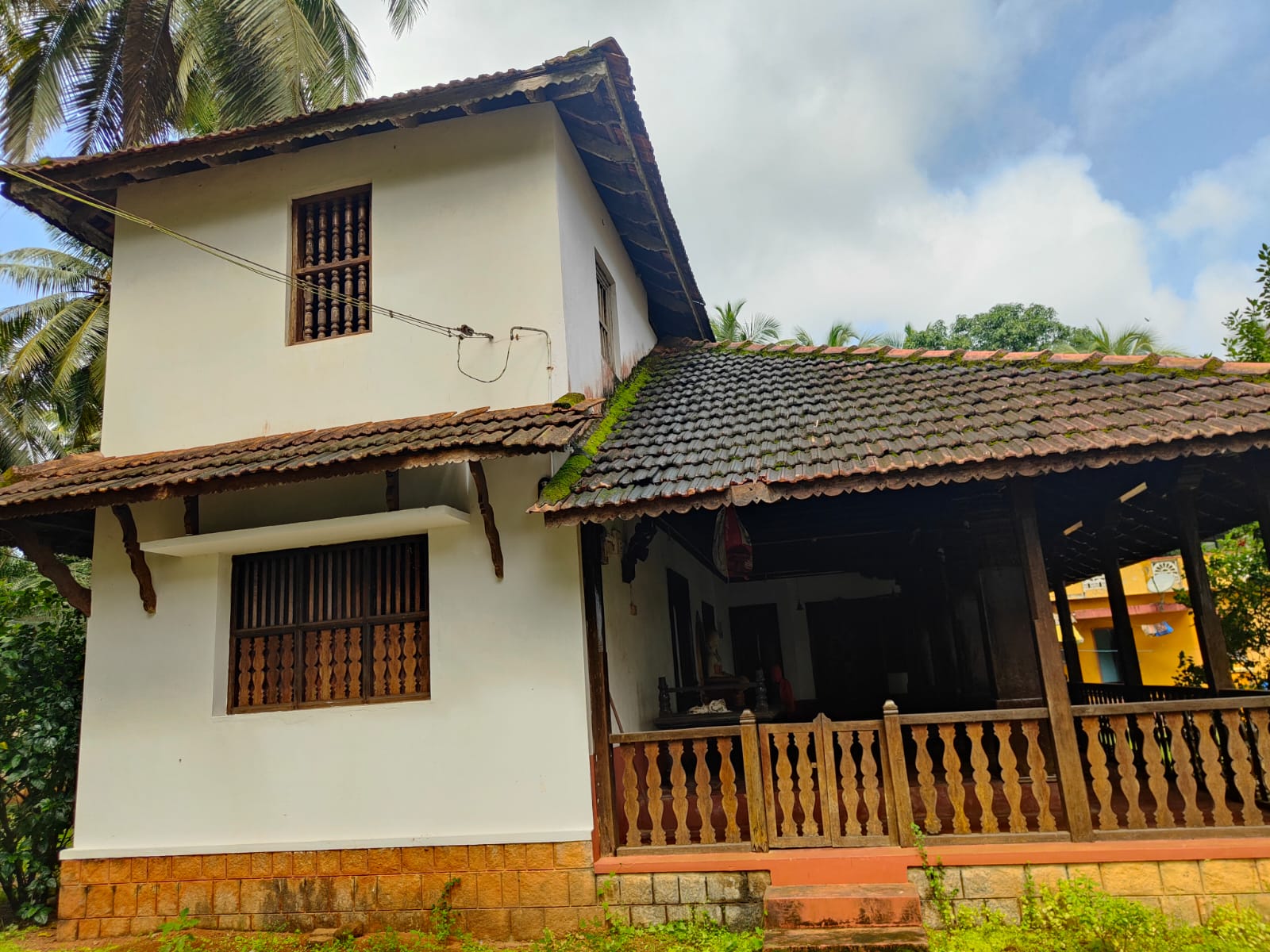
Available records of the Bennekudru Shree Kula Mahastri Amma Temple describe the temple as having a history extending back more than a thousand years and record that the succession of nine Kula Gurus came to an end with the demise of Madhava Mangala Poojary in 1966.
Thus, when Principal Shetty introduced him to me as Guru, he was introducing me to the final custodian of a 'spiritual tradition' that had endured through generations.
Yet what fascinated me most was not merely his exalted position.
It was the simplicity with which he carried it.He was short in stature, but immense in wisdom.
He was not formally educated in the conventional sense, but possessed a remarkable understanding of people, relationships and human nature.
And perhaps that explains why his influence extended far beyond the boundaries of Bennekudru, for that matter, whole Coastal Karnataka and beyond...!
A Man Who Believed in Education:
One of the most beautiful chapters in his story is his association with the 'Barkur Educational Society'.
Madhava Mangala Poojary was among the members of the first 'Advisory Council' of the Barkur Educational Society in 1946.
He regularly attended meetings next 20 years and, according to Principal Shetty's recollections, carried a deep desire to see children of the Mogaveera and Poojary communities receive higher education.
At that time, many children in and around Bennekudru studied only up to Class IV in the local school.
Madhava Mangala Poojary wanted that to change.
He wanted children to go further. He wanted them to reach the National High School. And he did not merely speak about education.He acted.
Principal Shetty vividly recalled how Madhava Mangala Poojary would bring children to the then Headmaster Sri P. N. Bhoja Rao, seek admission for them into Class VI, arrange the necessary fees and even request old, used textbooks so that lack of resources would not prevent a child from continuing education.
What a beautiful measure of a man's greatness!
The Guru of Bennekudru was not concerned only with rituals and tradition.
He understood that education was the doorway to a better future.
Long before education became a slogan, he was quietly opening that door for children, we who were deprived of....
The Judge Who Needed No Law Book:
Another dimension of his personality makes his story even more remarkable.
Madhava Mangala Poojary was widely respected for his ability to resolve domestic and community disputes.
He rarely rushed to occupy the seat of authority.
When a grievance was brought before the Garodi, he would summon both parties, listen carefully and try to understand the dispute from every angle.
He would consult elders - Priests, Gurikara's and teachers....
He would speak to neighbours.
He would seek the views of people who knew the circumstances of the families involved.
And, according to stories remembered about him, he sometimes went personally—even in disguise—to understand the ground realities before arriving at a decision.
That was his method.
'Listen. Understand. Investigate. Consult. Then decide'.
His word carried extraordinary weight.
Yet his own explanation for this authority was characteristically humble.
When people wondered how an uneducated man could deliver such 'balanced judgements', his answer was simple in spirit:
“I am uneducated. I am only an instrument in the hands of the Presiding Deity of the Garodi. I am not qualified to sit on the chair occupied by my predecessors.”
That humility perhaps explains why people trusted him.
'He did not claim wisdom. People discovered wisdom in him'.
A Guru Beyond His Own Community:
Madhava Mangala Poojary's greatness was never confined to his own community.
One of the most touching examples came during the Centenary Celebrations of St Peter's Church, Barkur, in 1954.
A colourful procession involving around 100 boats from Mabukala to Barkur was organised as part of the celebrations.
River travel in those days was not the organised and regulated activity we know today.
Many participants and guests were not familiar with the river and its dangers.
Madhava Mangala Poojary understood the risk.
He therefore helped organise large wooden boats to provide safety cover with his men, swimmers for the procession and cautioned the organisers about the importance of protecting people who were inexperienced with the river.
His intervention was practical, timely and entirely natural.
The Church authorities, recognising his contribution, duly acknowledged and recorded his assistance.
That little episode says something profound about Barkur.
A Hindu Guru from Bennekudru extended his helping hand to a Christian celebration.
No barriers of religion stood between them.
There was only community, friendship and concern for human safety.
That was the Barkur of those days.
And perhaps, in many ways, that is the Barkur we must rediscover.
When Two Feasts Met:
Another beautiful story survives through family memory.
The annual feast of the parish and the festival of the Bennekudru Garodi would occasionally fall on the same day.
For the Christian community, the celebrations followed a familiar sequence—second week in December Confraternity Sunday, procession through the main streets, Tuesday evening Vespers and Wednesday's feast.
On one such occasion, probably around 1956 or 58, the parish feast Pirjenth was my grandfather's brother, Simon Furtado.
Simon was a little worried, approached his elder brother, my grandpa, Gasper Furtado who was Gurkar of Pandeshwar ward, advised his younger brother 'not to worry but meet Guruji' , who happened to be a close neighbour and friend of Madhava Mangala Poojary, living across the river.
When they realised that the parish feast and the Bennekudru festivities were scheduled to coincide, the three men simply sat together and discussed the matter.
There was no argument. No competition. No question of whose festival was more important.
They found an amicable solution.
The 'Genda Seve' was postponed by a day.
Such accommodation, it is remembered, continued as long as Madhava Mangala Poojary lived.
Today, this may appear like a small incident.
It was anything but small.
It represented a culture of mutual respect and understanding that allowed different communities to celebrate their faith without allowing their traditions to come in the way of friendship.
A Legacy That Refuses to Disappear:
Madhava Mangala Poojary, Darshana Patri of the great Garodi who also had knowledge of traditional ayurvedic medicine curing hundreds, passed away in 1966, bringing to an end the nine-generation Guru tradition of Bennekudru.
But his departure did not bring an end to his influence.
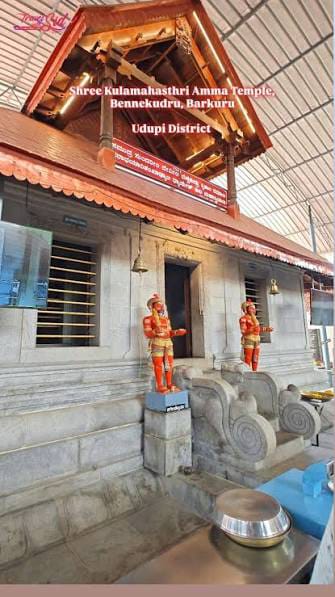
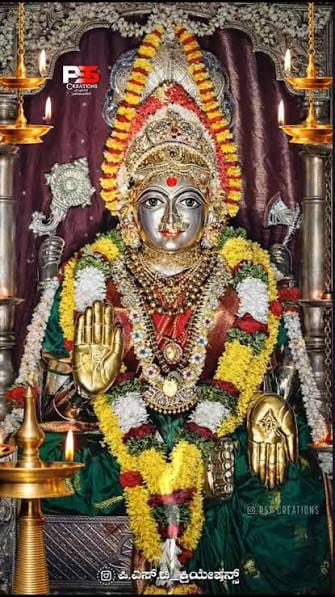
'The Bennekudru Shree Kula Mahastri Amma Temple', beautifully renovated now, led by Dr G Shankar and collogues continues to be revered as an important centre of worship, particularly among the Mogaveera community, and the memory of the Guru remains deeply embedded in the spiritual and cultural heritage associated with the place.
As stated earlier, his name has travelled far beyond Barkur.
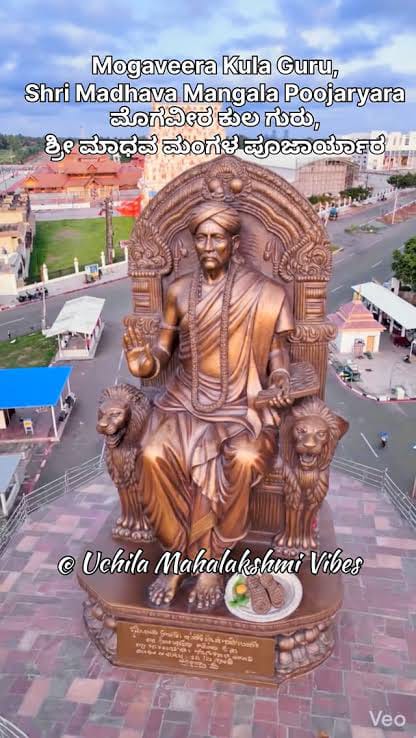
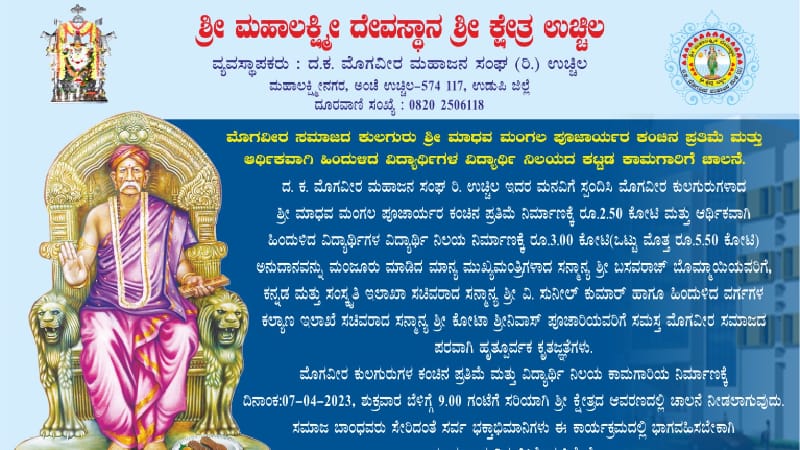
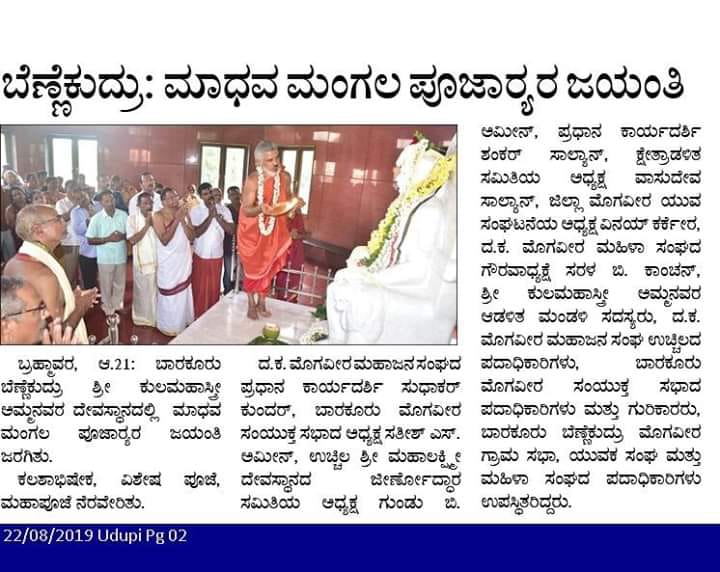
His memory has been honoured in community events even decades after his passing. I tcn 2012, for example, a Mogaveera Vyavasthapaka Mandali cricket tournament in Mumbai was dedicated to Guru Madhava Mangala Poojary, a touching indication of the continuing respect for his memory among people far away from Bennekudru.
Today, institutions, community halls and memorials bearing his name, together with the reverence associated with his memory, continue to remind later generations of the man he was.
The Face in the Old Photograph:
But for me, Madhava Mangala Poojary will always remain connected to that old photograph.
Thirty Seven faces. Seven I could recognise. And one face that Principal B. Seetharama Shetty transformed from an old, forgotten image into a living story...!!
I can still imagine him pointing towards that simple face and saying:
“He is Guru.”
That was the moment I discovered that history is not always preserved in books.
Sometimes it sits quietly inside an old photograph.
Sometimes it survives in the memories of an elderly Principal.
Sometimes it is carried forward through stories told across generations.
And sometimes, a single sentence is enough to open an entire chapter of the past.
“He is Guru—Madhava Mangala Poojary.”
The last Guru of Bennekudru.
The ninth in a centuries-old succession.
A man without formal education who understood the value of education and encouraged many including Prof Shambhu Shankar a research historian taught in Bhandarkars College Kundapura were studied in NHS Barkur.
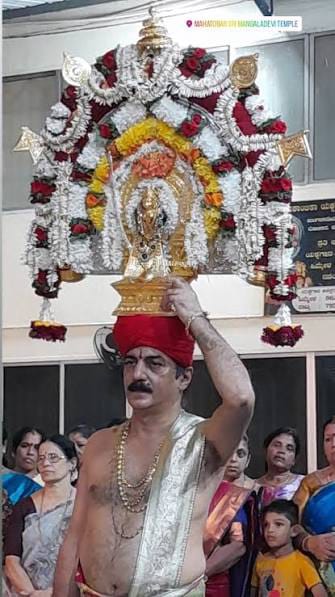
A humble man whose judgement carried authority. In day's transportation was cumbersome, during Ashadha Month Guruji was carried on a palkin by four people village to village from Uppalla near Mangalore till Gokarna in Uttara Kannada to unite faithful and distribute prasadam every year....
A community leader who preferred reconciliation to confrontation.
A Hindu Guru who extended his helping hand to a Christian and Muslim celebration.
A neighbour and friend who respected another community's feast and found accommodation rather than confrontation.
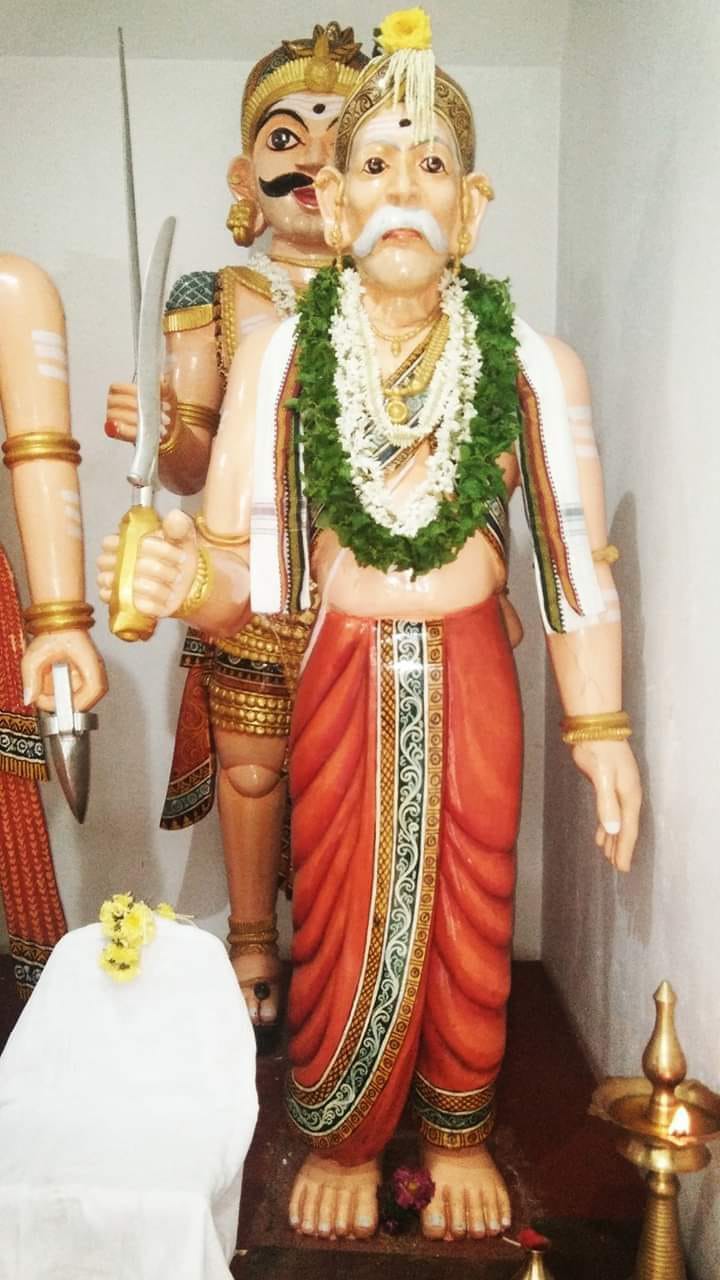
And above all, a simple human being who left behind an extraordinary legacy of wisdom, service, harmony and humility.
Barkur has produced many celebrated personalities.
But some of its greatest sons and daughters may never have sought fame.
They simply lived their lives, served their people and quietly strengthened the bonds that held this unique Temple town together.
Madhava Mangala Poojary was one such towering soul.
And perhaps the finest tribute to him is not merely to remember the title he carried—
Guru.
It is to remember the values he lived:
wisdom without arrogance,
authority without pride,
tradition without intolerance,
service without publicity,
and faith without division.
That is why, even today, when his name is spoken in Bennekudru, it is not merely the name of a man who belonged to the past.
It is the name of a tradition, a legacy of a Guru.
May his memory continue to inspire Barkur to remain what it has always been at its best—'a land where traditions are respected, education is cherished, communities live together and humanity rises above every boundary'
—Prof. P. Archibald Furtado
Admin Coordinator, National Educational Institutions, Barkur
The Barkur Educational Society (Regd.)